Digital First Dentistry › Intraoral scan accuracy
Intraoral scan accuracy: trueness, precision and technique
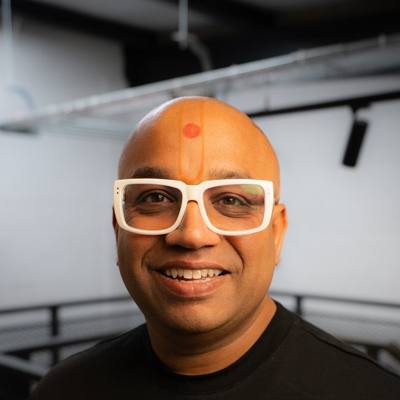 By Dr Bhavin Bhatt BDS MFGDP RCS (Eng) · GDC 76358
Updated November 2026
About this CPD
- Format
- Free online self-study, about 1 hour: this page, the required reading below, a five-question check and a short feedback form.
- CPD hours
- 1 hour of verifiable CPD
- Aim
- To help clinicians understand and control the factors that decide whether an intraoral scan is accurate enough for its purpose.
- Objectives
- Define accuracy, trueness and precision as used in scanning research.
- List clinical and technical factors that affect scan accuracy.
- Describe a consistent scanning strategy and when to rescan.
- Explain how to check a scan before sending it for manufacture.
- GDC development outcomes
- C: Maintenance and development of knowledge and skill within your field of practice.
- Provider and quality assurance
- Provided by Bhavin Associates Ltd (company 07713563). Quality assured by Dr Bhavin Bhatt BDS MFGDP RCS (Eng), GDC 76358, for Bhavin Associates Ltd. See how CPD is quality assured.
The terms
In measurement science (ISO 5725), accuracy combines trueness — how close a measurement is to the true value — and precision — how close repeated measurements are to each other. Scanner studies report both, usually against a high-accuracy reference scan.
What affects accuracy
- Span: errors can build up over longer spans, so full-arch work is more demanding than a single tooth.
- Moisture, saliva and blood, which can distort or obscure surfaces.
- Soft tissue and margins: subgingival margins need retraction and a dry field.
- Reflective surfaces such as metal or highly polished restorations.
- Strategy: erratic movement, gaps and repeated passes can introduce stitching errors.
- Calibration and software: follow the manufacturer's calibration schedule and keep software current.
A consistent strategy
Use the manufacturer's recommended scan path, keep the tip at the right distance, move steadily, and capture the occlusal, buccal and lingual surfaces with overlap. Scan the bite as instructed. Train the whole team to the same strategy so results are repeatable.
Check before you send
- Margins are clear and continuous.
- No holes or doubled surfaces in critical areas.
- The bite registration matches what you see clinically.
- Preparation clearance is adequate.
If in doubt, rescan the area — it is quicker than a remake.
Know the limits
Read the evidence for your planned use, especially for long-span and full-arch implant work, where additional techniques such as photogrammetry or verification jigs may be used.
Required reading
Read these short pages as part of this CPD:
Doing this as a team? Send it to your nurses and hygienists: WhatsApp · Email
Check your learning
Answer all five questions. You need four correct to continue. You can try again.
Feedback and certificate
Your feedback is part of quality control and is required before your certificate is issued. Your name and GDC number appear on the certificate. We keep your feedback and details to manage CPD records; see the privacy notice.
Your certificate
Thank you. Your certificate is ready.
Keep it with your CPD record and personal development plan, and note which development outcomes it meets.
Share it: Post on LinkedIn · Send on WhatsApp
Scanning implants: scan bodies, libraries and verification →
Get the white paper and the starter guide
Free. Enter your email and both open straight away.