Digital First Dentistry › Routine intraoral scanning at the check-up
Routine intraoral scanning at the check-up
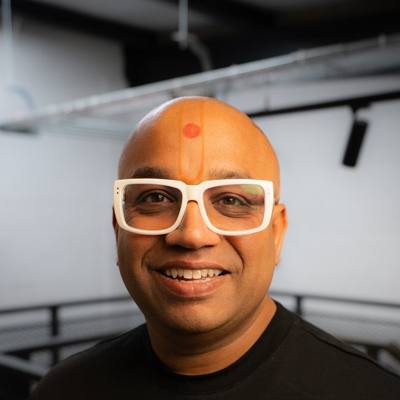 By Dr Bhavin Bhatt BDS MFGDP RCS (Eng) · GDC 76358
Updated November 2026
About this CPD
- Format
- Free online self-study, about 1 hour: this page, the required reading below, a five-question check and a short feedback form.
- CPD hours
- 1 hour of verifiable CPD
- Aim
- To help dental professionals use an intraoral scanner as a routine part of the periodic examination, not only for making restorations.
- Objectives
- Describe what a routine check-up scan adds to the conventional examination, and what it does not replace.
- Plan where the scan sits in the appointment and who in the team takes it.
- Choose one simple measure to track whether routine scanning is happening.
- Identify the common reasons routine scanning stalls and how teams overcome them.
- GDC development outcomes
- B: Effective management of self and effective management of others or effective work with others in the dental team, in the interests of patients at all times; providing constructive leadership where appropriate.
- C: Maintenance and development of knowledge and skill within your field of practice.
- Provider and quality assurance
- Provided by Bhavin Associates Ltd (company 07713563). Quality assured by Dr Bhavin Bhatt BDS MFGDP RCS (Eng), GDC 76358, for Bhavin Associates Ltd. See how CPD is quality assured.
Why scan at the check-up
Most adult mouths change slowly. Tooth wear, marginal breakdown around restorations, gum recession, drifting contacts and cracks rarely announce themselves between visits. At a periodic examination the clinician compares what they see today with memory, a few notes and perhaps a radiograph or photograph. That makes slow change hard to judge and harder still to show the patient.
A full-arch intraoral scan with a bite record captures the visible surfaces in three dimensions in a few minutes. On its own it is a detailed picture. Repeated at the next check-up, it becomes a comparison, and comparison is where its diagnostic value lies. The first scan is the baseline; every later scan is measured against it.
What the scan does not do
- It does not replace the clinical examination. It is an adjunct that prompts closer checks.
- It does not show what lies beneath the surface. Radiographs remain essential where indicated, under the usual justification rules.
- It does not make the diagnosis. Findings on screen need clinical confirmation before they are discussed as findings.
Where the scan fits in the appointment
Teams that make scanning routine usually decide three things in advance.
- Who scans. The clinician, or a dental nurse trained to scan, within what the GDC Scope of Practice, your indemnity and your practice protocols allow. Delegation frees the clinician's time but needs training, a written protocol and a check of the scan before the patient leaves.
- When it happens. Many teams scan before the clinician's examination, so the scan is ready to look at together with the patient. Others scan at the end. Either works if it is the same every time.
- Which patients first. Start with adults with heavily restored mouths, signs of wear, or treatment under discussion, where change between visits matters most. Widen the group once the habit is formed.
Making it stick
Owning a scanner is not the same as using it diagnostically. Habits form through small, repeated steps. A four-week approach works for many teams: agree the rules in week one, aim for a small daily number in week two, compare scans and hold a short team huddle in week three, then make it normal for the starting patient group in week four.
Track one number: routine check-up scans per clinician per day. Review it monthly. It is the simplest measure of whether the scanner is part of diagnosis or only part of manufacturing.
Scanning for the patient, not just the record
A routine scan earns its place when the patient sees it too. Turn the screen, show one finding, and at the next visit compare the scans together so the patient can see change for themselves. This is Educate, Engage, Empower, covered in the free module on co-discovery and co-diagnosis.
Common sticking points
- Time. A routine scan adds minutes. Teams find them by delegating the scan, by preparing the scanner before the patient sits down, and by planning the appointment length honestly rather than squeezing the scan in.
- Confidence. Many clinicians were trained to use a scanner to make things, not to look for change. Practice on colleagues and on routine patients before using scans in complex conversations.
- What happens next. A scan that shows something but leads nowhere loses the team's interest. Agree in advance how findings are graded, recorded and reviewed (see the module on communicating scan findings).
What the evidence shows
In a twelve-month evaluation with the University of Manchester (97 UK dentists, under peer review), the share of dentists scanning at routine check-ups rose from 10% to 80%. It was a pre/post evaluation with no control group, so it shows association rather than proof of cause.
Required reading
Read these short pages as part of this CPD:
- Scan: make the scan part of every check-up
- How to make routine scanning stick in 30 days
- Check-up time planner
Doing this as a team? Send it to your nurses and hygienists: WhatsApp · Email
Check your learning
Answer all five questions. You need four correct to continue. You can try again.
Feedback and certificate
Your feedback is part of quality control and is required before your certificate is issued. Your name and GDC number appear on the certificate. We keep your feedback and details to manage CPD records; see the privacy notice.
Your certificate
Thank you. Your certificate is ready.
Keep it with your CPD record and personal development plan, and note which development outcomes it meets.
Share it: Post on LinkedIn · Send on WhatsApp
Communicating scan findings and recording consent →
Get the white paper and the starter guide
Free. Enter your email and both open straight away.