Digital First Dentistry › Digital complete dentures
Digital complete dentures: records, design and fitting
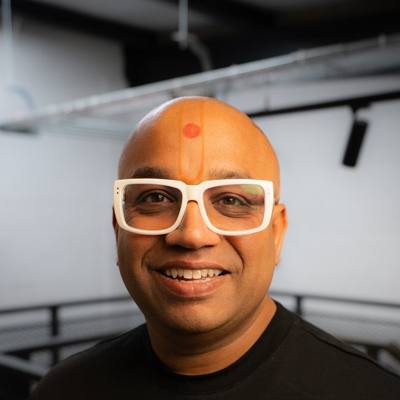 By Dr Bhavin Bhatt BDS MFGDP RCS (Eng) · GDC 76358
Updated November 2026
About this CPD
- Format
- Free online self-study, about 1 hour: this page, the required reading below, a five-question check and a short feedback form.
- CPD hours
- 1 hour of verifiable CPD
- Aim
- To help dental professionals provide complete dentures using digital workflows with predictable results.
- Objectives
- Describe the records needed for a digital complete denture.
- Explain the challenges of scanning edentulous arches and the alternatives.
- Compare printed and milled manufacture at a high level.
- Plan try-in, fitting and review, and explain the evidence to patients.
- GDC development outcomes
- C: Maintenance and development of knowledge and skill within your field of practice.
- Provider and quality assurance
- Provided by Bhavin Associates Ltd (company 07713563). Quality assured by Dr Bhavin Bhatt BDS MFGDP RCS (Eng), GDC 76358, for Bhavin Associates Ltd. See how CPD is quality assured.
Why digital dentures
Digital workflows can reduce visits, keep a stored design for remakes and give consistent, documented materials. Systematic reviews report that digitally fabricated complete dentures show similar or better clinical performance than conventional dentures, with patient satisfaction broadly comparable, while long-term evidence is still building.
Records
- Edentulous arches, including border areas and the posterior palatal seal region.
- Jaw relationship and vertical dimension.
- Tooth position, lip support and midline, often with photographs.
- An existing denture, if satisfactory in parts, can be scanned as a starting point.
Scanning edentulous arches
Mobile tissue and few landmarks make edentulous scanning harder than dentate scanning. Some clinicians scan directly; others take conventional border-moulded impressions and digitise them, which some studies associate with better retention. Choose the approach that gives reliable border extension in your hands.
Manufacture
Bases and teeth can be printed or milled. Printed dentures suit try-ins, immediates and many definitive cases within material indications; milled dentures use pre-polymerised blocks. Either way, follow the material's instructions exactly.
Try-in, fitting and review
- Try in a printed prototype to check aesthetics, phonetics, vertical dimension and occlusion.
- Adjust the design, not just the denture, so the stored file stays correct.
- Fit, adjust pressure areas and check occlusion.
- Review and keep the final design file for future remakes.
Consent
Explain the process, the number of visits, what is known about longevity, and that aesthetics and speech may need adjustment.
Required reading
Read these short pages as part of this CPD:
Doing this as a team? Send it to your nurses and hygienists: WhatsApp · Email
Check your learning
Answer all five questions. You need four correct to continue. You can try again.
Feedback and certificate
Your feedback is part of quality control and is required before your certificate is issued. Your name and GDC number appear on the certificate. We keep your feedback and details to manage CPD records; see the privacy notice.
Your certificate
Thank you. Your certificate is ready.
Keep it with your CPD record and personal development plan, and note which development outcomes it meets.
Share it: Post on LinkedIn · Send on WhatsApp
Dental radiography: IR(ME)R, justification and optimisation →
Get the white paper and the starter guide
Free. Enter your email and both open straight away.