Digital First Dentistry › Why dentistry still starts at the point of failure
Why dentistry still starts at the point of failure
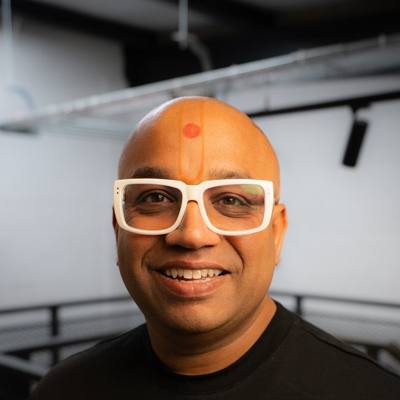 By Dr Bhavin Bhatt BDS MFGDP RCS (Eng) · GDC 76358
Updated November 2026
Think about the last few emergency appointments in your diary. A cusp that snapped on a sandwich. A quadrant that has been sore for a week. A crown that came off on a Sunday. Most of us could have predicted at least some of them. The cracks, the worn edges and the failing filling margins were often there at the last routine check-up.
That is the starting point of a white paper on digital-first dentistry I published this month. Its first claim is simple: general practice is still organised around failure.
How point-of-failure dentistry works
A patient comes back when something hurts or breaks. We repair the tooth in front of us, often well, and the cycle resets. The examination that could have looked at the whole mouth becomes a checkpoint: a quick look, "all fine", see you in six months.
Nobody designs it this way on purpose. It is what happens when the check-up is short, the patient feels fine, and the next problem is not yet painful. But it has costs. Teeth are restored one at a time, usually after they break, when the options are bigger and fewer. A cusp fracture that could have been an onlay becomes a crown. Slow tooth wear is noticed only when the patient complains about short, chipped front teeth.
It is not a knowledge gap
The white paper is clear on this point, and it matches what I have seen in training more than 300 dentists. Most general dentists can spot these problems. They know a wider conversation is warranted. What holds them back is the moment itself: worry about sounding like a salesperson, about overwhelming a patient who came in for a routine visit, or about being turned down.
I call this clinician the hesitant dentist. Not inexperienced, not lacking skill, but held back at the point of conversation. If you have ever looked at a heavily restored lower molar, thought "that will go one day", and said nothing because the patient was in a hurry, you know the feeling.
The gap is what the patient can see
The key line in the paper is this: the problem is rarely the dentistry. It is the distance between what the clinician can see and what the patient can understand.
You see a craze line, a shadow under a marginal ridge, a wear facet that has grown. The patient sees nothing, feels nothing, and hears a dentist describing a problem they cannot picture. No wonder the conversation feels awkward on both sides, and no wonder "let's keep an eye on it" so often means nobody does.
Why the routine check-up is the missed moment
The routine check-up is repeated millions of times a year. It is the one appointment where the whole mouth could be looked at calmly, before anything breaks, with a patient who is not in pain. That makes it the best time to start comprehensive care, not the emergency slot.
This is where the intraoral scanner comes in. In most practices it is used "digital second": it only comes out after treatment has been decided, to take an impression for a crown or aligners. Digital-first dentistry reverses that. A scan at the routine check-up puts the whole mouth on screen, so the patient looks at their own teeth alongside you. The worn edge, the cracked cusp and the failing filling stop being your opinion and become something you both can see. That shared look is sometimes called co-diagnosis.
It also gives you a record. Next time, you compare the new scan with the old one. Change that was invisible becomes visible, and stable teeth can be confidently left alone. Monitoring is a valid outcome, and patients find it reassuring to see that nothing has moved.
What changes when the check-up comes first
- Earlier, smaller treatment. Problems are discussed while they are still small, so an onlay rather than a crown, or a bonded repair rather than a replacement.
- Planned rather than reactive care. Treatment can be grouped and planned, often by quadrant (quadrant dentistry), instead of one emergency at a time.
- Calmer conversations. You show rather than sell. The patient decides at their own pace, and "watch it" is always an option.
Does it work in practice?
Routine scanning can become a habit. In a University of Manchester study of 97 UK dentists, currently under peer review, the share of dentists scanning at routine check-ups rose from 10% to 80% within 12 months of structured training. It was a before-and-after evaluation with no control group, so it shows what changed, not proof of why.
Where to start
You do not need new equipment. Pick one group of patients this week, such as those with heavily restored mouths, and scan them at the check-up before you decide anything. Show them the scan first, then talk. The guide to scanning at the routine check-up covers the steps, and the 60-second self-check shows where your practice is now.
This is the first of five posts explaining the white paper in plain English. Next: Scan, See, Scale, the three moves of digital-first dentistry.
Get the white paper, starter guide and checklist
Free. Enter your email and we will email all three to you.
Check your inbox.
We have sent you a short email to confirm your address. Click the button in it and your free resources arrive straight away. If it is not there in a few minutes, look in your spam or promotions folder.