What three practices reported after making the scan routine, and how groups roll it out across surgeries.
Practice figures are as reported by the practices; practice names are withheld. Study figures are from the University of Manchester study of 97 UK dentists, under peer review, and are associations, not proof of cause.
Most practices own a scanner. Few use it at every check-up.
The money has already been spent on the scanner. The three practices below each made one habit routine: scanning at every suitable check-up, not only when a crown or aligner is already planned. What follows is what they reported, not proof that the habit caused it.
The problemCheck-ups rely on eye, probe and notes. Treatment waits until a tooth breaks or hurts. The scanner only comes out to make the crown or start the aligner case.
The costAn expensive scanner that sits idle most of the day, with little planned crown, onlay, aligner or implant work coming from it.
The promiseA scan at every suitable check-up, so cracks, wear and bite problems are seen early and can be planned as crowns, onlays, aligners and implants where clinically needed.
For patients: problems seen before they break, fewer visits (often same-day), and tooth-coloured restorations designed and made chairside, often at a lower fee than a lab-made restoration where clinically suitable.
How one routine scan becomes the whole digital workflow
1Routine scan
At every appropriate check-up, not only when a patient asks.
2Seen together
Verified findings on screen; change tracked between visits.
3Restorative, printed
Planned by quadrant and made chairside, often the same day.
4Aligners
Teeth moved first so restorations are smaller, or not needed.
5Implants
Long-term replacement planned within the patient relationship.
↻ The next routine scan tracks the result and starts the loop again.
Five steps from owning a scanner to using it: the three practices reported their gains at the last three
1
Installed
The scanner is in the practice.
2
Activated
The team has been trained to use it.
3
Embedded
A scan at every appropriate check-up.
4
Productive
What the scans show leads to planned crowns, onlays, aligners and implants.
5
Scaled
The same routine runs in every surgery, or every practice in a group.
Most practices stop at step 2: the scanner is installed and the team is trained, but it is still only used to make things. In the three practices below, the reported gains came at steps 3 to 5.
02
Three practices, one system, the same direction of travel
Three very different practices used the same system. Which one is closest to yours?
Model 1
The mature practice
15 → 80 restorative units a month
Who it suits
Long-serving owner, trusted patient list
What it did differently
Crowns and onlays printed in-house, a quarter of the mouth at a time, priced close to a large filling
You’ll recognise it if
Your scanner is under-used and most work is single teeth
Model 2
The acquisition
Implants ~4 → 30+ a month
Who it suits
New owners of an established practice
What it did differently
Digital first as the plan for adding value
You’ll recognise it if
You’ve bought a practice with heavy lab bills and an older patient list
Model 3
The start-up
Four surgeries in use within a year
Who it suits
Dentist opening a practice from scratch
What it did differently
Same-day emergencies and same-day printed dentistry
You’ll recognise it if
You have spare surgeries, an open diary and emergency demand nearby
Model 1 · The mature practice
Printing crowns in-house, a quadrant at a time: the practice reported about five times the units and three times the monthly margin
A long-serving principal moved from single-tooth repair to planned quadrant dentistry, while patients paid less than half the previous fee per unit.
Starting pointMixed NHS and private, four chairs, 20-minute check-ups. Patients trusted the principal, but treatment was mostly single teeth, done when something broke. He was wary of proposing more comprehensive care.
What changedAfter routine scanning started, the practice reported that findings were easier to show and discuss, and that restorative volume doubled at the same fees. The practice then printed nearly all indirect restorations chairside, priced them close to a direct filling, and planned them by quadrant.
Exhibit 5
Monthly restorative margin, before chair time and staff
Fees less lab or material cost. Lab £100–150 a unit before; about £6 a unit printed. Reported by the practice.
Routine scans 0 → 3–4 a dayAligner starts 1 → 4 a monthOne 90-minute visit per quadrant, against twoAbout 12 months
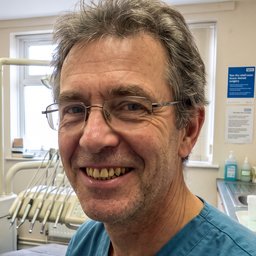
Dr Smith Principal, the mature practice
Figures reported by the practice.
Model 2 · The acquisition
Digital first as the value-creation plan: the owners report revenue and team doubled in 12 months
Two new owners, a cosmetic dentist and a prosthodontist, made routine scanning and chairside printing the core of their plan.
Starting pointA long-established mixed practice with 15-minute check-ups, bought from two traditional owners. An older patient list, mostly in their 50s to 70s, with heavy crown and bridge histories; no aligners offered.
What changedCheck-ups extended to 30 minutes, every one scanned. Restorative work moved straight to chairside printing, priced lower and planned across the whole mouth. Aligners introduced where oral health would benefit.
Per month
Restorative units
Fee per unit
Lab or material
Kept after lab costs*
Before (previous owners)
~80
~£700
~£10,000
~£46,000
After 12 months
170+
~£350
~£1,000
~£58,500
*Before chair time and staff costs.
Routine scans 0 → 10 a dayAligners: none → 150+ a yearImplants ~4 → 30+ a monthRevenue and team doubledDemand exceeds capacity
Older patients who already paid for private health screening welcomed data-led, preventive dentistry from their own dentist. The owners report that implant growth came mainly from replacing failing teeth that support dentures. The practice has no staff-retention problem: nurses approach it asking to work there.
Dr Cortes Co-owner, the acquisition practice
Figures reported by the practice. Location withheld at the owners’ request.
Model 3 · The start-up
A start-up built on same-day emergencies and same-day printing reported all four surgeries in use within a year
A former associate opened a two-surgery shopfront and reached about £135,000 a month with all four surgeries in use within 12 months.
The modelAbout £250 for a same-day emergency with consultation and radiographs, against about £100 locally for a new-patient check-up. Every emergency includes a full digital-first examination. Patients who rarely attend arrive knowing they have a problem, and want it all sorted out.
Same-day dentistryWith an open diary and two surgeries, the dentist prepares a tooth in one, sees another patient while the restoration prints, and fits it the same day once the nurse has finished it. Neighbouring teeth that need work are treated in the same visit, while still numb.
After 12 months
Same-day emergencies
About 40 a month; three-quarters or more go on to planned treatment
Printed restorations
120+ a month at £199; about £720 a month in materials
Implant cases
150+ in the first year, many after extractions
Aligner cases
100+ in the first year, often where an emergency traced to the bite
Surgeries
2 → 4
Monthly revenue
About £135,000
The owner reports that growth came by word of mouth, in an area where NHS access is hard to get and single-tooth care is the norm.
Dr Patel Owner, the start-up
Figures reported by the practice.
Exhibit 6
Implant and aligner cases a year, as reported by three practices
Implant cases a yearAligner cases a year
Figures reported by the practices. Model 1 printed about 960 restorations a year, Model 2 more than 2,000 and Model 3 more than 1,400.
03
Practices that scanned routinely reported more planned crowns, aligners and implants
Chairside printing: what the practices reported on cost per restoration
A scan gives a visual basis for discussing why an onlay may be appropriate, for example a cracked cusp or a failing margin seen to change between visits. Clinical need decides treatment; the scan informs the conversation.
Material costs fall to about £6–10 a unit against about £100–150 for a laboratory restoration, and where the diary allows, the restoration is made and fitted the same day.
Cost per onlay
Laboratory
Chairside
External laboratory fee
~£100–150
—
Printing material
included
~£6–10
Visits for the patient
two
one
What is printing worth to you?
Move the sliders to match your own practice.
Left after lab fees, per month
Left after printing costs, per month
Extra left over, per year
Fee less laboratory or material cost, at the same volume and fee. Excludes equipment, chair time and staff costs. An illustration using your own figures, not a forecast.
The clinical question first: are printed restorations good enough?
Permanent printing resins are ceramic-filled (filler content varies by product; check the manufacturer’s data).
Several are cleared for definitive single crowns, inlays, onlays and veneers on natural teeth, with US FDA clearance, EU MDR certification or UKCA marking, depending on the product.
Follow each material's stated indications: tooth-borne single units, not every case.
Long-term clinical survival data for printed permanent resins is still building; most evidence so far is short to medium term.
What the practices described was not the printer itself but what they reported followed: more planned care, delivered faster, at a lower fee to the patient.
Aligners become protection before restoration, not cosmetics
Where scans show wear, crowding or a bite where front teeth meet too hard and too soon, moving teeth first can mean smaller restorations later, or none. Median aligner starts doubled in the study (an association, not proof of cause); Model 2 went from none to 150+ a year and Model 3 reached 100+ in its first year.
You don’t need to market cosmetic orthodontics. Restorative-led aligner cases come from your own check-ups.
Long-term planning brings implants into the routine relationship
Routine scans provide a visual record that supports discussion of the long-term prognosis of individual teeth and future replacement options, including implants where clinically indicated. Implant outcomes were not measured in the study. In practice, Model 2 grew from about 4 to 30+ implant cases a month and Model 3 started 150+ in its first year.
The same chairside workflow now reaches implants too. Some systems support printed crowns on implants, so an implant can be scanned, the crown designed and printed, and the patient restored with fewer visits, within each material’s stated indications.
Routine monitoring brings earlier, better-informed discussions about tooth replacement into existing patient relationships.
The opportunity
You have already bought the technology. The three practices above report that making the scan routine is when it started to pay back, clinically and commercially. Their results are their own reports, not a forecast for yours.
The gap is not equipment or skill. It is a repeatable routine, the language to share findings, and a team that runs it every day. That is what Dr Bhatt’s training programme builds.
04
Running several practices? Make it the same in every surgery
One digital-first dentist is a single report. A group can only judge the return when every surgery runs the same routine and is measured the same way.
Start with one practiceProve the routine where the scanner already sits, and count routine scans per dentist each day.
Copy what worksThe same check-up routine, the same words and the same traffic-light assessment in every surgery.
Measure and scaleTrack scans, plans and printed restorations by practice, and spread what your best practice does.
This is the approach Dr Bhatt used as Clinical Growth Officer for a 10-practice group (to September 2026), and in implementation programmes across three UK cohorts of independent and group practices.
 Dr Smith