Digital First Dentistry › Monitoring tooth wear and change with intraoral scans
Monitoring tooth wear and change with intraoral scans
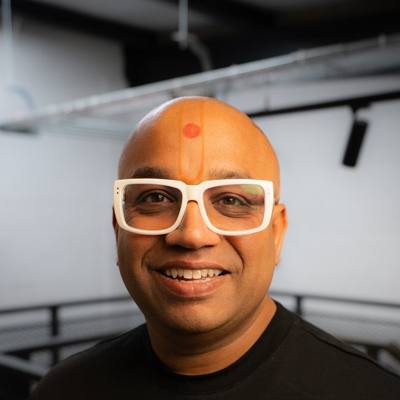 By Dr Bhavin Bhatt BDS MFGDP RCS (Eng) · GDC 76358
Updated November 2026
About this CPD
- Format
- Free online self-study, about 1 hour: this page, the required reading below, a five-question check and a short feedback form.
- CPD hours
- 1 hour of verifiable CPD
- Aim
- To help dental professionals use repeated intraoral scans to record, monitor and manage slow change such as tooth wear, recession and marginal breakdown.
- Objectives
- Explain why slow change is hard to judge by eye and from notes.
- Take consistent baseline and follow-up scans suitable for comparison.
- Distinguish the main types of tooth wear and why the cause matters for management.
- Use monitoring as an active, recorded decision with a review interval.
- GDC development outcomes
- C: Maintenance and development of knowledge and skill within your field of practice.
- Provider and quality assurance
- Provided by Bhavin Associates Ltd (company 07713563). Quality assured by Dr Bhavin Bhatt BDS MFGDP RCS (Eng), GDC 76358, for Bhavin Associates Ltd. See how CPD is quality assured.
Why slow change is hard to judge
Tooth wear, recession and breakdown at the margins of restorations usually progress slowly. Change between visits is small and easy to miss by eye. Photographs vary with angle and lighting, and notes describe wear rather than measure it. The result is that clinicians and patients often cannot say whether a worn edge is getting worse or has been stable for years, and the default becomes waiting until something fails.
What repeated scans add
A full-arch scan with a bite record taken at a routine check-up provides a three-dimensional baseline. Later scans can be overlaid on it so that areas of change stand out. Many scanner platforms include comparison tools; others allow scans to be exported in open formats for comparison in separate software. Even without software, showing last year's scan beside this year's helps a patient see what is happening.
Scanning for comparison
- Scan the full arch of both jaws and record the bite, so occlusal surfaces and contacts are captured.
- Be consistent: similar scan strategy and conditions each time. Control moisture, because saliva and blood affect the surface the scanner records.
- Check the scan before the patient leaves: gaps in the data where change is suspected make later comparison unreliable.
- Store and label scans so the right baseline can be found at the next visit.
The cause matters as much as the change
Tooth wear is commonly grouped as attrition (tooth-to-tooth contact, for example with bruxism), erosion (chemical loss from acids, dietary or intrinsic), abrasion (from external objects or habits such as aggressive brushing) and abfraction (a debated, load-related loss near the cervical margin). Many patients show more than one type. The scan records the change; history, diet, habits and clinical examination identify the likely cause. Management follows the cause: dietary advice and referral where reflux is suspected, splints for parafunction, brushing advice for abrasion. Indices such as the Basic Erosive Wear Examination (BEWE) can help record severity consistently.
Monitoring is a treatment decision
Not every finding needs treatment. Active monitoring means recording the finding, explaining it, agreeing when to look again and comparing at that visit. Where wear is stable, recording it may be all that is needed. Where it progresses, the comparison supports a timely conversation about prevention or restoration while the options are still small.
Beyond wear
The same approach helps with gum recession, drifting teeth, cracks and marginal breakdown around restorations. In each case the value comes from consistent scans, compared over time, interpreted alongside the clinical examination and radiographs where indicated.
Required reading
Read these short pages as part of this CPD:
- Monitoring and prevention
- Monitoring tooth wear with intraoral scans
- Basic Erosive Wear Examination (BEWE)
Doing this as a team? Send it to your nurses and hygienists: WhatsApp · Email
Check your learning
Answer all five questions. You need four correct to continue. You can try again.
Feedback and certificate
Your feedback is part of quality control and is required before your certificate is issued. Your name and GDC number appear on the certificate. We keep your feedback and details to manage CPD records; see the privacy notice.
Your certificate
Thank you. Your certificate is ready.
Keep it with your CPD record and personal development plan, and note which development outcomes it meets.
Share it: Post on LinkedIn · Send on WhatsApp
Digital workflows: from scan to laboratory, printed restorations and implants →
Get the white paper and the starter guide
Free. Enter your email and both open straight away.