Digital First Dentistry › What is digital-first dentistry?
What is digital-first dentistry?
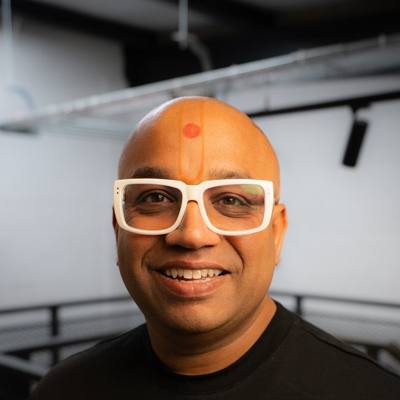 By Dr Bhavin Bhatt BDS MFGDP RCS (Eng) · GDC 76358
Updated November 2026
English · Español · Deutsch · Português · Français · العربية
Digital-first dentistry is a way of practising in which the intraoral scan is taken at the routine check-up, before any treatment is decided. The scan becomes a record of the mouth that can be compared between visits, so change is seen early and care is planned before teeth break.
Digital first and digital second
| Digital second (common today) | Digital first | |
|---|---|---|
| When the scan happens | After treatment is decided | At the routine check-up |
| What the scanner is for | Making things: crowns, aligners, implant restorations | Spotting cracks, wear and bite problems first, then making crowns, onlays and aligners |
| How change is tracked | Notes and memory | Scans compared visit to visit |
| How care is planned | Tooth by tooth, often when something breaks | Early, often by quadrant, with monitoring as a valid option |
| The patient conversation | The dentist explains and persuades | The patient sees their own teeth and the change over time |
The five steps
- Scan at every appropriate check-up, alongside the conventional examination.
- See the findings with the patient, and compare with the last scan.
- Plan restorative care early, by quadrant where indicated, often made chairside.
- Move teeth first with aligners where that makes restorations smaller or unnecessary.
- Replace failing teeth with implants as a planned decision, not an emergency.
Five levels of adoption
Owning a scanner is only the first step. Practices move through five levels: installed, activated, embedded (a scan at every appropriate check-up), productive (scans drive restorative, aligner and implant planning) and scaled (the same routine across a group). Find your level with the 60-second self-check.
The evidence so far
In a University of Manchester study of 97 UK dentists (under peer review), the share of dentists scanning at routine check-ups rose from 10% to 80% within 12 months of structured training. The study was a before-and-after evaluation without a control group. The approach is also described in a white paper on Zenodo.
Where to start
Common questions
What is digital-first dentistry?
Digital-first dentistry is a way of practising in which the intraoral scan is taken at the routine check-up, before treatment is decided, so that change can be recorded between visits and care can be planned early. It reverses the usual order, where the scanner is used only after a decision to make a crown, an aligner case or an implant restoration.
How is it different from digital dentistry?
Digital dentistry describes the tools: scanners, design software, printers and milling. Digital-first describes when they are used. A practice can own every digital tool and still be digital second, scanning only to make crowns and aligners.
Does digital-first mean scanning every patient?
It means scanning at every appropriate check-up, alongside the conventional examination, using clinical judgement. The scan is an adjunct to the examination, not a replacement for it.
Is it tied to one scanner brand?
No. The behaviours it describes are not tied to any manufacturer. The original training programme ran within one scanner and aligner ecosystem, and transfer to other platforms has not yet been formally tested.
Where does the term come from?
Dr Bhavin Bhatt, a UK general dentist, uses it to describe the change from check-ups by eye and probe, where the scanner comes last, to check-ups where the scan comes first. It is set out in his white paper on Zenodo and in a University of Manchester study of 97 UK dentists, currently under peer review.
Get the white paper, starter guide and checklist
Free. Enter your email and we will email all three to you.
Check your inbox.
We have sent you a short email to confirm your address. Click the button in it and your free resources arrive straight away. If it is not there in a few minutes, look in your spam or promotions folder.